
Many small businesses still treat their website as an online brochure. It explains what they do, but it does not actively help bring in appointments or organize customer requests. Modern scheduling systems have changed customer expectations. People want clear availability, instant confirmation, and the ability to book a time without waiting for someone to answer the phone.
A WordPress site can meet this expectation by functioning as an automated customer booking system. This approach allows a small business to operate with the same professionalism and responsiveness as larger companies that rely heavily on automated scheduling.
About Automated Booking Systems
Automated booking systems give customers the ability to view available times, choose an appointment, and receive confirmation without waiting for a person to respond. These systems are designed to reduce the workload on the business owner by handling tasks that normally require repeated phone calls or back and forth messages.
They can connect to a manager’s or owner’s existing calendar, such as Google Calendar or Outlook. When a customer selects a time, the system records it and helps ensure that availability stays accurate. Customers can receive appointment confirmations and reminders by email or text based on the settings the business chooses. These reminders help reduce missed appointments and improve time management.
Automated booking systems also support simple data collection. When customers schedule a time, they can enter information the business needs before the meeting. This can include their name, contact information, and a short description of what they need. Some systems also allow customers to complete a payment during the booking process through standard ecommerce integrations.
How This Works on a WordPress Site
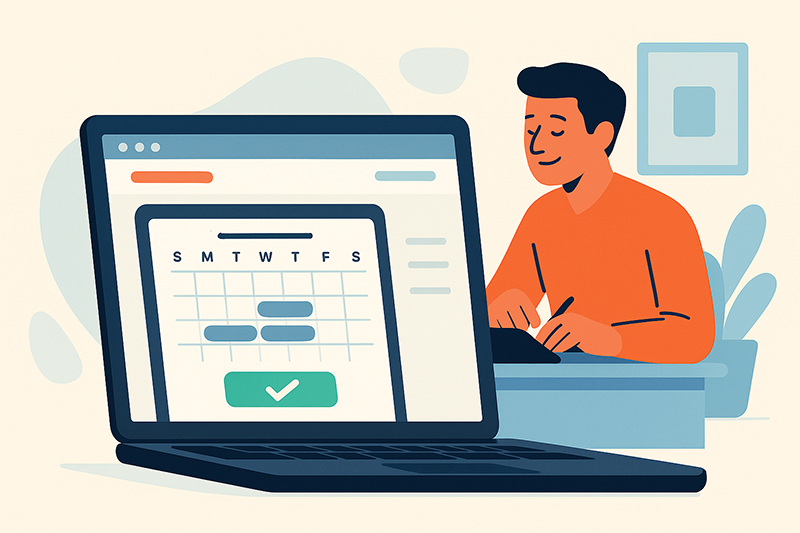
A WordPress site can host a fully functioning booking system that becomes part of the overall customer experience. The business can show available time slots directly within the site. Customers select a time, enter their information, and confirm their appointment.
The system can update the business owner’s schedule in real time and send an email or text confirmation to the customer. It can also send reminders to help customers remember the appointment. This reduces the chances of missed meetings and creates a smoother experience for both sides.
Because the booking process happens inside the website, the business can guide the customer through a complete journey. A visitor can read about the services, understand the process, and schedule a time in one visit. The site becomes more than a static page. It becomes a working component of daily operations.
Why Automated Booking Matters for Small Businesses
Small businesses often struggle with missed calls, delayed replies, and the pressure of balancing daily work with administrative tasks. Automated scheduling provides a practical solution to these challenges.
It turns the website into a digital receptionist that is available at all times. Customers can book a time even when the business is closed. This helps capture leads that might otherwise be lost.
It also saves time for the business owner. Instead of answering scheduling calls or coordinating availability, the system handles it. This allows the owner to focus on delivering services and managing their daily workload.
A modern booking experience also presents a more professional image. Customers often trust businesses that make scheduling easy and predictable. When a website offers clear availability, instant confirmation, and reminders, it signals that the business is organized and values customer time.
Practical Uses for Local Businesses
Local service providers can benefit in many ways. A salon, tutoring service, lawn care provider, consultant, or handyman can all use automated booking to simplify how customers reach them. The website becomes the central location where customers learn about the business and take the next step.
Entrepreneurs who do not yet have a website can consider setting one up so they can use automated scheduling, contact management, and other digital systems that support daily operations.
Conclusion
Automated booking systems allow a WordPress site to function as a working part of the business rather than an information page. Customers can choose a time, enter their details, and receive confirmation without waiting. Business owners save time, reduce missed appointments, and offer a professional experience that matches modern expectations.
This approach helps small businesses operate more efficiently and remain available to customers at every hour. It also strengthens the website as a core business system that supports daily operations and long term growth.